
Some Historical Notes on Paul's First Letter to the Corinthians
Part one

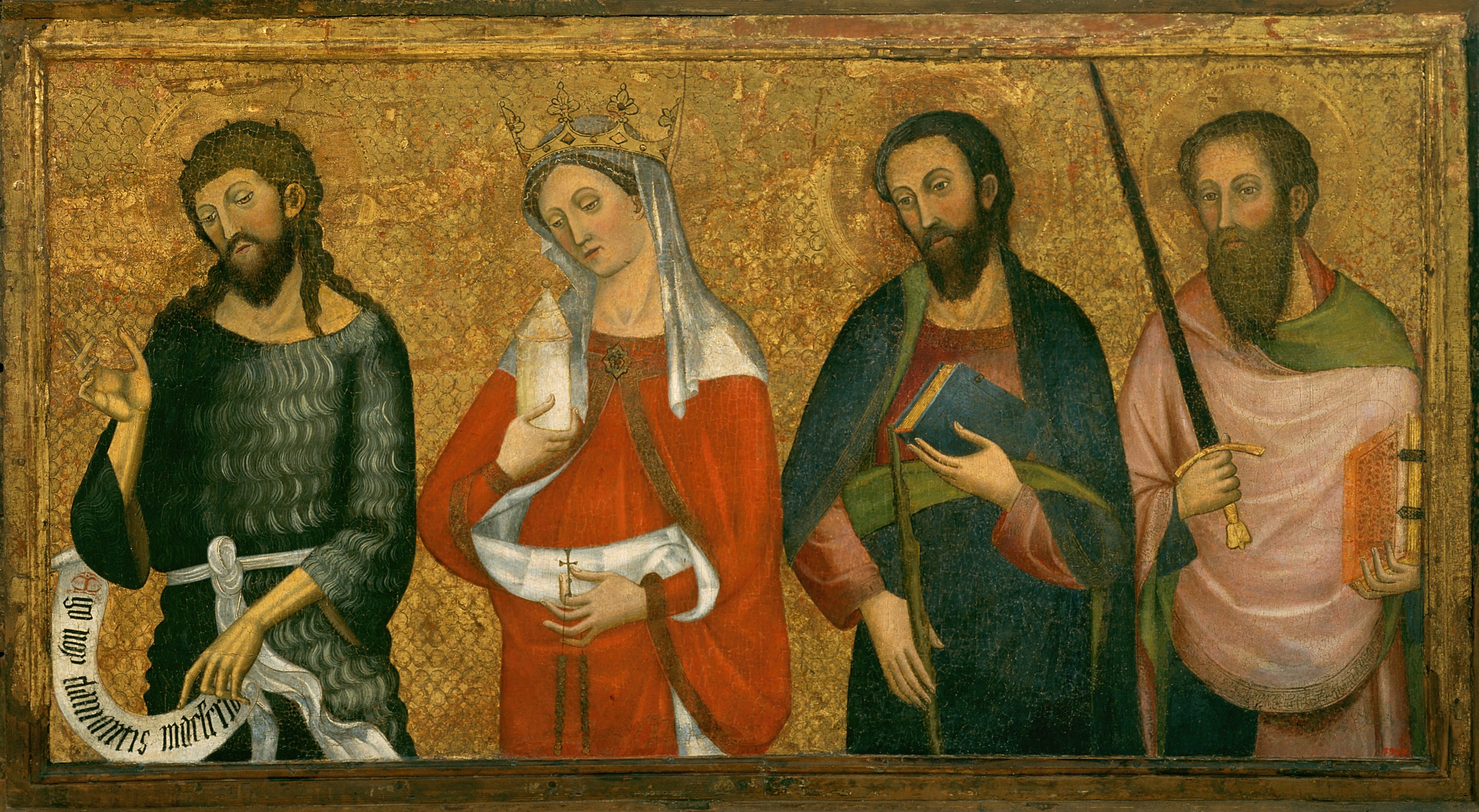
You can read the Bible through a variety of lenses. The most common is devotional or theological: Scripture as a source of spiritual formation and guidance. My own interest lies less in that way of reading and more in the historical-critical lens. Rather than asking how Paul’s words apply to my personal faith, I am more interested in what his letters reveal about the social dynamics, conflicts, and theological development of the earliest Christian communities.
First Corinthians is widely regarded as one of Paul’s undisputed letters, meaning that a strong majority of scholars agree that it was in fact written by him. Paul—also known as the Apostle to the Gentiles—was a first-century Jewish follower of the resurrected Jesus who, after a dramatic conversion experience, became a missionary throughout the eastern Mediterranean. He didn’t know Jesus, but he claims that the resurrected Jesus appeared to him. His letters, written roughly between 50 and 60 CE, are the earliest surviving Christian texts and were addressed to specific communities he had founded or influenced. They offer not only theological reflection but also direct insight into the practical concerns, divisions, and beliefs of the earliest assemblies of Christians.
In church, we often take isolated verses from Paul’s letters and apply them directly to contemporary life. Yet when these texts are read cover to cover, they reveal themselves to be documents of their time—written to address disputes within early Christian communities. Near the outset of 1 Corinthians, Paul responds to reports of factionalism in Corinth and names the divisions explicitly:
It has been reported to me about you, my brothers, by Chloe’s people, that there are rivalries among you. I mean that each of you is saying, “I belong to Paul,” or “I belong to Apollos,” or “I belong to Cephas,” or “I belong to Christ.” Is Christ divided? Was Paul crucified for you? Or were you baptized in the name of Paul? I give thanks [to God] that I baptized none of you except Crispus and Gaius, so that no one can say you were baptized in my name. (I baptized the household of Stephanas also; beyond that I do not know whether I baptized anyone else.) For Christ did not send me to baptize but to preach the gospel, and not with the wisdom of human eloquence, so that the cross of Christ might not be emptied of its meaning.
—1 Corinthians 1:11–17, NABRE
What is interesting here is the specificity. We are given names—Chloe, Apollos, Cephas, Crispus, Gaius, Stephanas—and a glimpse into an actual dispute unfolding within a small, first-century community. It is theology of a sort, but more so a response to particular rivalries, loyalties, and misunderstandings. When read this way, the letter feels less like a timeless theological manifesto and more like a window into the lived realities of an early Christian group. We do not always read Paul’s letters in this light.
Further down in chapter 1, Paul says something I find historically important. Here it is:
For Jews demand signs and Greeks look for wisdom, but we proclaim Christ crucified, a stumbling block to Jews and foolishness to Gentiles, but to those who are called, Jews and Greeks alike, Christ the power of God and the wisdom of God.
—1 Corinthians 1:22–24, NABRE
This points to what I consider one of the most historically interesting aspects of early Christianity. Today, many Christians take for granted that the Messiah was crucified. Of course he was, we might say. It was foretold in Scripture. But Paul’s comment reminds us that the claim itself was, in its original context, deeply counterintuitive.
To proclaim a crucified Messiah was, by Paul’s own admission, absurd to many. Gentiles were not awaiting a Jewish Messiah in the first place, and the idea that a man executed as a criminal could be worshipped as Lord and Savior would have sounded strange, if not ridiculous. For many Jews, the claim would have been even more difficult. Messianic expectations in this period often centered on a royal or Davidic figure—someone who would defeat Israel’s enemies and restore national sovereignty. A crucified Messiah did not fit that framework.
Now, turning back to specific issues within the Corinth community. Observe:
It is widely reported that there is immorality among you, and immorality of a kind not found even among pagans—a man living with his father’s wife. And you are inflated with pride. Should you not rather have been sorrowful? The one who has done this deed should be expelled from your midst.
I, for my part, although absent in body but present in spirit, have already as if present judged the one who has committed this deed, in the name of [our] Lord Jesus: when you assemble and I am with you in spirit with the power of the Lord Jesus, you are to deliver this man to Satan for the destruction of his flesh, so that his spirit may be saved on the day of the Lord.
—1 Corinthians 5:1–5, NABRE
An unnamed man, Paul says, is “living with his father’s wife.” He offers no further detail. The phrase probably implies a sexual relationship, not mere cohabitation, particularly given the severity of Paul’s response and the language of “immorality.” This might be a case of incest involving a stepmother. It could have just been a rumor. Whatever the precise circumstances, Paul treats it as a serious violation.
What is striking is the severity of his rhetoric. He instructs the community to expel the man and, more dramatically, “deliver this man to Satan for the destruction of his flesh.” The exact meaning of this phrase remains unclear.
Finally, the apocalyptic horizon is present in this passage. Paul adds, “so that his spirit may be saved on the day of the Lord.” The “day of the Lord” refers to the anticipated return of Christ, when judgment would occur and the faithful would be vindicated. Even here, in one of his harshest moments, Paul’s aim is not permanent exclusion but eventual restoration. The offender’s salvation remains possible. The urgency of the discipline makes sense within that apocalyptic expectation.
Regarding apocalypticism, here is a passage that might not seem apocalyptic on the surface, but in fact carries clear apocalyptic implications:
Now to the unmarried and to widows I say: it is a good thing for them to remain as they are, as I do, but if they cannot exercise self-control they should marry, for it is better to marry than to be on fire.
Now in regard to virgins, I have no commandment from the Lord, but I give my opinion as one who by the Lord’s mercy is trustworthy. So this is what I think best because of the present distress: that it is a good thing for a person to remain as he is. Are you bound to a wife? Do not seek a separation. Are you free of a wife? Then do not look for a wife. If you marry, however, you do not sin, nor does an unmarried woman sin if she marries; but such people will experience affliction in their earthly life, and I would like to spare you that.
—1 Corinthians 7:7–9, 25–28, NABRE
When my wife and I were married in the Catholic Church, we were required to affirm that we would have children and raise them in the faith. That expectation stands in noticeable contrast to Paul’s advice here. In this passage, Paul suggests that those who are unmarried would do well to remain unmarried, as he himself is. Marriage is permitted, but it is not presented as an ideal.
Why would Paul give such advice? The answer likely lies in his apocalyptic outlook. Paul believed that the present age was nearing its end and that Christ would soon return. If the world as they knew it was about to pass away, the ordinary rhythms of life—marriage, family formation, building future generations—would naturally seem less urgent. From that perspective, Paul’s counsel makes sense.
Chapter 7 also contains one of the few times where Paul indirectly quotes Jesus, again on the subject of marriage. Observe:
To the married, however, I give this instruction (not I, but the Lord): a wife should not separate from her husband—and if she does separate she must either remain single or become reconciled to her husband—and a husband should not divorce his wife.
— 1 Corinthians 7:10–11, NABRE
By stating “not I, but the Lord,” Paul indicates that this instruction derives from a teaching attributed to Jesus rather than from his own judgment. The teaching corresponds closely with traditions preserved in the Synoptic Gospels. The Gospel of Mark records Jesus as saying:
“Whoever divorces his wife and marries another commits adultery against her; and if she divorces her husband and marries another, she commits adultery.”
—Mark 10:11–12, NABRE
These passages represent two independent early Christian sources that attribute a similar teaching on divorce to Jesus. Because of this convergence, many scholars consider the prohibition of divorce to be among the teachings of Jesus that has a relatively strong claim to historical authenticity.
Paul gets back onto the topic of marriage in chapter 9:
My defense against those who would pass judgment on me is this. Do we not have the right to eat and drink? Do we not have the right to take along a Christian wife, as do the rest of the apostles, and the brothers of the Lord, and Cephas? Or is it only myself and Barnabas who do not have the right not to work? Who ever serves as a soldier at his own expense? Who plants a vineyard without eating its produce? Or who shepherds a flock without using some of the milk from the flock?
—1 Corinthians 9:3-7 NABRE
One notable implication of this passage is that certain early Christian leaders—including Cephas (Peter) and the “brothers of the Lord”—were married. The tradition that Peter had a wife is independently attested in the Gospels, where Jesus heals Peter’s mother-in-law.
Of particular interest is Paul’s reference to the “brothers” of the Lord in the plural. The New Testament clearly identifies James, the brother of Jesus, as a prominent leader in the Jerusalem church after Jesus’ death. However, Paul’s plural wording raises the possibility that other brothers of Jesus were also involved in the early Christian movement. The Gospel of Mark preserves the names of several of Jesus’ siblings:
"Is he not the carpenter, the son of Mary, and the brother of James and Joses and Judas and Simon? And are not his sisters here with us?"
—Mark 6:3 NABRE
If Paul’s remark is taken at face value, it may suggest that more than one of these brothers participated in the early Christian mission. Yet the New Testament preserves remarkably little information about them beyond their names. Despite their familial relationship to Jesus, they do not appear prominently in the surviving texts.
Interestingly, the first-century Jewish historian Josephus provides a reference to James:
And now Caesar, upon hearing the death of Festus, sent Albinus into Judea as procurator. But when Ananus the high priest saw that Festus was now dead, and that Albinus was still on the road, he assembled the Sanhedrin of judges, and brought before them the brother of Jesus who was called Christ, whose name was James, and some others; and when he had formed an accusation against them as breakers of the law, he delivered them to be stoned.
—Antiquities of the Jews, Book 20, Chapter 9, Section 1
Thus, somewhat paradoxically, one of the most detailed references to Jesus’ brother James comes not from a Christian source but from a non-Christian historian.
Beloved subscribers, next week’s essay will continue my analysis of Paul’s First Letter to the Corinthians. In the meantime, I would greatly appreciate it if you would complete the poll below. I am trying to better understand what kinds of essays/stories you most enjoy reading so that I can focus more of my writing in those areas.
This is a really interesting take on 1 Corinthians. It’s helpful to see Paul’s letters not just as timeless teaching but as responses to real disputes and people in early Christian communities. It makes the offense of a crucified Messiah, church discipline, and his advice on marriage feel much more immediate and rooted in their historical context.
Regardless of whether Saul/Paul had ever met Jesus, he certainly was familiar with - but opposed to - His teaching. Otherwise, he wouldn't have organized the stoning of Stephen (Acts 7:58). Saul lived in Jerusalem from his youth onward, received an elite education under the renowned Jewish teacher Gamaliel in Jerusalem (Acts 22:2-3), and his sister's son is mentioned in Acts 23:16.