
Where Matthew Edits Mark

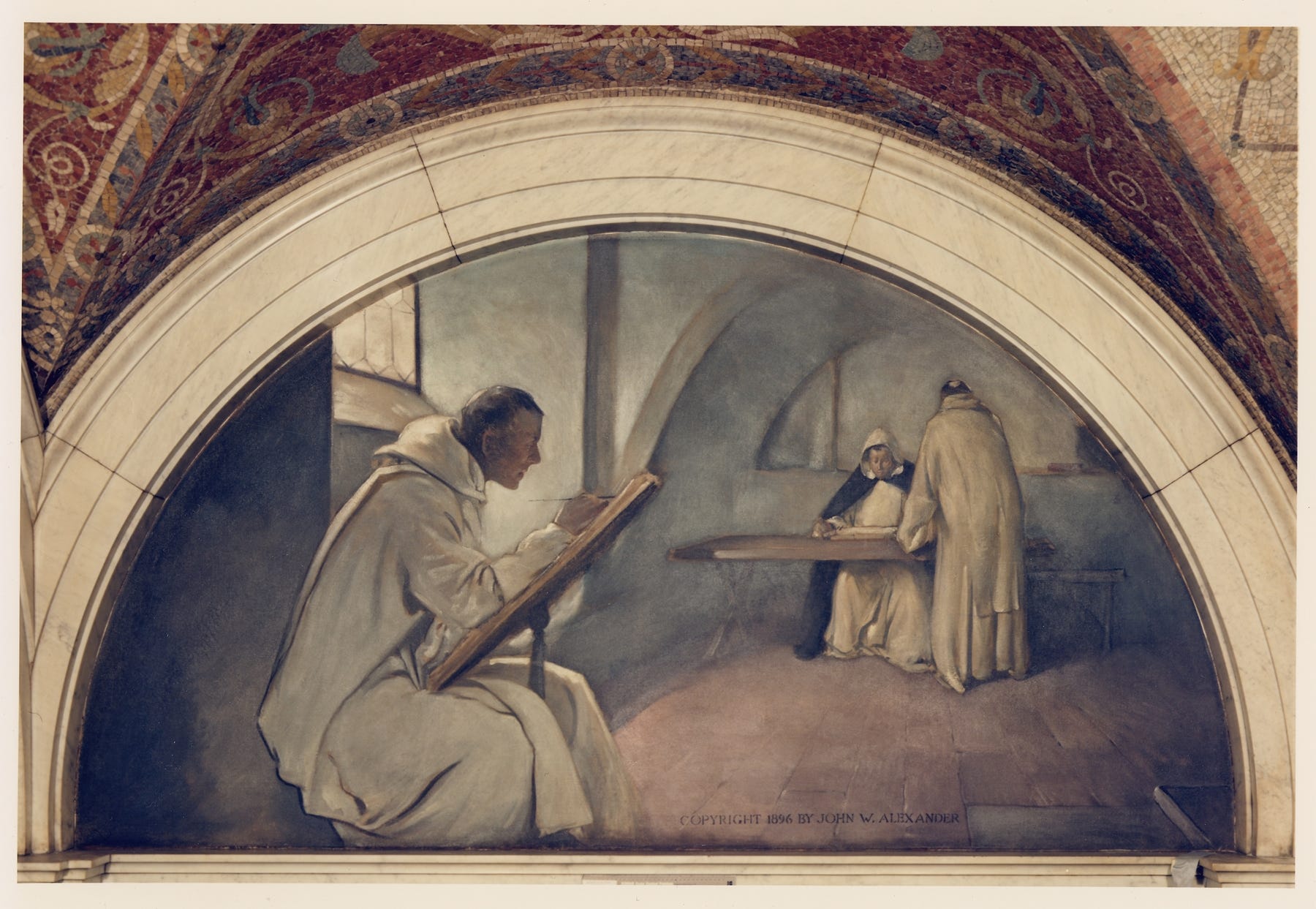
It is widely accepted in New Testament scholarship that the author of the Gospel of Matthew used the Gospel of Mark as a source. Matthew not only follows Mark’s overall narrative structure but frequently reproduces Markan material verbatim, preserving episode order, phrasing, and Greek vocabulary. The degree of verbal and structural overlap is often so close that Matthew can be understood as revising and redacting Mark rather than composing an independent narrative.
Most of Matthew’s modifications to Mark are minor, but some are theologically and historically significant. Matthew’s editorial activity is often deliberate and revealing. In this essay, we will examine three such instances.
The Baptism
First, we’ll explore a one-word change and its significance. In Mark, after Jesus is baptized by John, God speaks to Jesus. Here is the passage:
It happened in those days that Jesus came from Nazareth of Galilee and was baptized in the Jordan by John. On coming up out of the water he saw the heavens being torn open and the Spirit, like a dove, descending upon him. And a voice came from the heavens, “You are my beloved Son; with you I am well pleased.”
—Mark 1:9-11 NABRE
Matthew includes the same episode in his Gospel. Observe:
After Jesus was baptized, he came up from the water and behold, the heavens were opened [for him], and he saw the Spirit of God descending like a dove [and] coming upon him. And a voice came from the heavens, saying, “This is my beloved Son, with whom I am well pleased.”
—Matthew 3:16-17 NABRE
There is an important change that is easy to miss at first. Consider what God says. In Mark, the voice says, “You are my beloved Son.” In Matthew, it says, “This is my beloved Son.” The shift is subtle, but it changes the scene: God is no longer speaking directly to Jesus, but is addressing all present.
This difference is significant because it changes who the revelation is for. In Mark, the divine voice addresses Jesus directly, which can be read as a private or visionary experience. In Matthew, the voice functions as a public proclamation, revealing Jesus’ identity to others. Matthew thus turns the baptism from a personal moment of affirmation into a scene of public christological disclosure.
Now, shifting gears—it is difficult to prove, but I suspect this episode may trace back to the historical Jesus—especially Mark’s version. Jesus’ baptism by John is a somewhat awkward detail to invent, since it places Jesus in a subordinate position to another prophetic figure. For this reason, the vast majority of historical Jesus scholars conclude that Jesus was indeed baptized by John.
If that core event is historical, it is plausible that some of the associated details—such as the claim that God spoke to him after he emerged from the water—also derive from Jesus’ own experience and later recollection. He may have told this story to his followers, who preserved it in oral tradition until it reached the Gospel writers. At the same time, it remains possible that the heavenly voice is a Markan literary construction.
Eating Kosher
Matthew is often called the “Jewish” Gospel. The author shows familiarity with Jewish scripture, law, and concerns, and frequently frames Jesus as a teacher within Jewish tradition. Most critical scholars agree that the Gospel was not written by the apostle Matthew but by an anonymous Jewish Christian author, likely writing for a community that still identified strongly with Judaism. In that context, questions about Torah observance (like dietary laws) would have mattered greatly.
In Jewish law, keeping kosher refers to observing dietary regulations outlined in the Torah and later rabbinic tradition, governing which foods may be eaten and how they must be prepared. Many Jews still practice this today. The Gospel of Matthew never has Jesus explicitly affirm or reject kosher laws. However, a small but revealing change between Mark and Matthew may suggest that Matthew was cautious about portraying Jesus as abolishing them.
Here is the passage in Mark:
He said to them, “Are even you likewise without understanding? Do you not realize that everything that goes into a person from outside cannot defile, since it enters not the heart but the stomach and passes out into the latrine?” (Thus he declared all foods clean.)
—Mark 7:18-19 NABRE
And here it is in Matthew:
He said to them, “Are even you still without understanding? Do you not realize that everything that enters the mouth passes into the stomach and is expelled into the latrine? But the things that come out of the mouth come from the heart, and they defile. For from the heart come evil thoughts, murder, adultery, unchastity, theft, false witness, blasphemy. These are what defile a person, but to eat with unwashed hands does not defile.”
—Matthew 15:16-20
Notice that Matthew removes Mark’s editorial comment: “Thus he declared all foods clean.” Mark interprets Jesus’ saying as abolishing Jewish dietary restrictions. That’s what he means when he says all foods are clean. Matthew reproduces the teaching almost verbatim but omits that conclusion. Instead, he narrows the issue to handwashing, rather than the broader question of kosher law.
This may indicate that Matthew, or his community, was uncomfortable with Mark’s implication that Jesus set aside dietary law. Throughout his Gospel, Matthew tends to emphasize continuity with the Torah (see Matthew 5:17–19), and here he quietly tones down one of Mark’s more radical interpretations. Whether or not Jesus himself rejected kosher laws, Matthew appears eager to present him as more Torah-observant than Mark does.
The Craftsman
You might know Jesus as a carpenter, but the Greek word used in Mark is broader than that. τέκτων (tektōn) can mean craftsman, builder, or artisan—it does not strictly mean “woodworker,” and in first-century Galilee, stone may have been the more common building material. Most Bibles translate it to “carpenter” nonetheless. In Mark, Jesus is explicitly identified with this trade; Matthew, however, makes a subtle but meaningful change.
Here are the relevant passages:
Is he not the carpenter, the son of Mary, and the brother of James and Joses and Judas and Simon? And are not his sisters here with us?” And they took offense at him.
—Mark 6:3 NABRE
Is he not the carpenter’s son? Is not his mother named Mary and his brothers James, Joseph, Simon, and Judas?
—Matthew 13:55 NABRE
Notice the difference: in Mark, Jesus himself is the τέκτων, a working craftsman. In Matthew, he is no longer described as a craftsman; instead, he is the son of one.
This change is significant. By downplaying the occupational detail, Matthew shapes how his readers perceive Jesus’ identity—not as a manual laborer, but as someone whose authority and significance transcend his social class. Matthew’s small change quietly recasts Jesus’ social position, reflecting the community’s interest in presenting him as a professional prophet, rather than a local craftsman.
Some Thoughts
Exploring these changes may seem minor to the casual reader, but for those engaged in biblical studies, they present significant insights into the theological shaping of the texts. Through Matthew’s revisions, we can observe how the portrayal of Jesus evolves: his divine status is emphasized, his authority made more public, and aspects of his ordinary human life (such as his occupation) are downplayed or reframed. In Matthew, the identity of Jesus as the Son of God is proclaimed more explicitly.
Perhaps more importantly, these changes remind us that the Gospels are deeply human texts. They are shaped not only by historical memory but also by the interpretive choices, theological priorities, and communal contexts of their authors. Matthew’s editorial decisions reflect the concerns of his audience, their relationship to Jewish law, and their understanding of Jesus’ significance.
Distinct and concise. A joy to read! Thanks for putting it into words.
It’s over for Matthean priorists