
What Was Jesus Like?

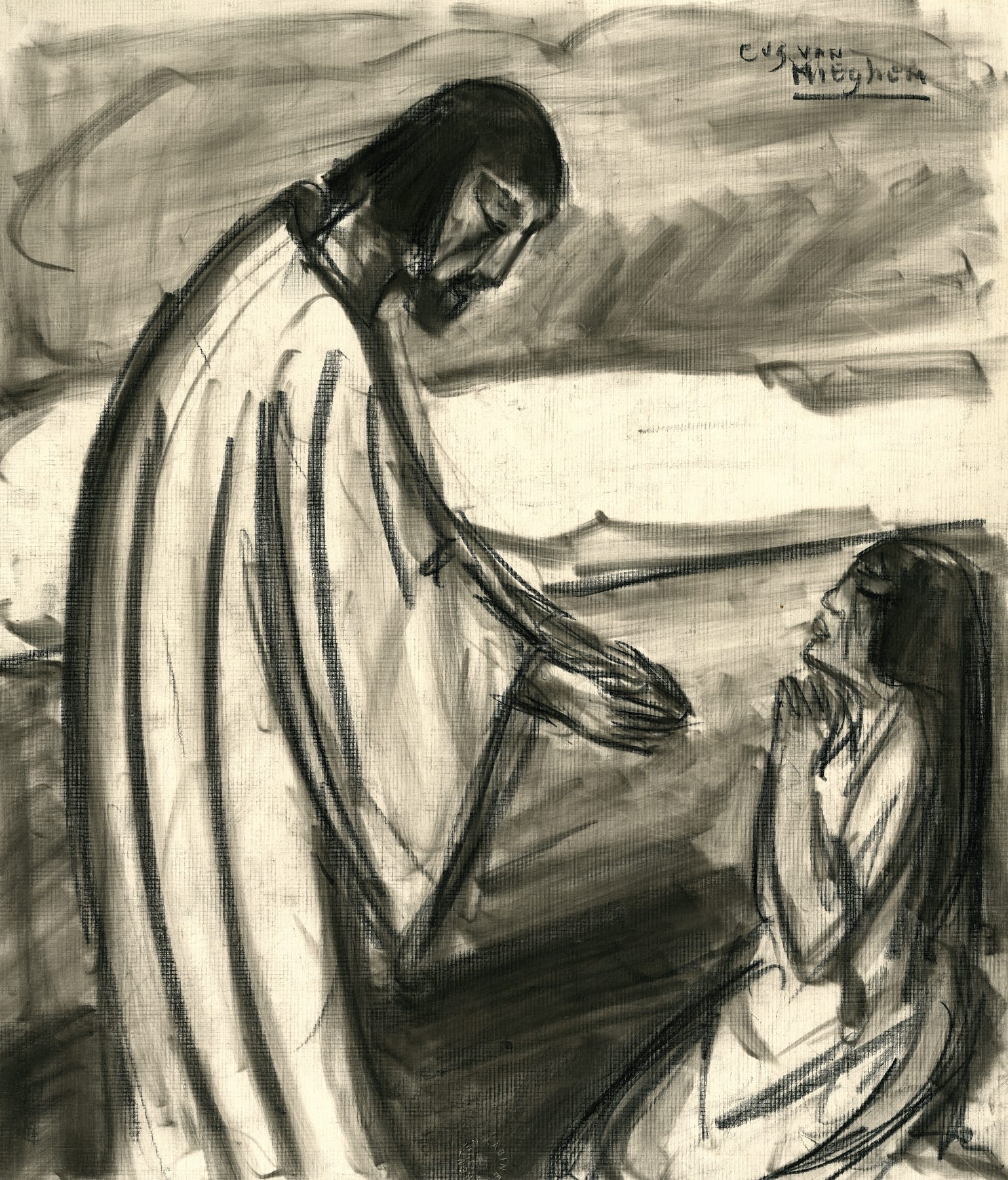
What sounds like something a four-year-old might ask has been on my mind a lot lately: what was Jesus like? Can historians make conclusions about his personality? Movies like The Passion of the Christ have already created a mental image—but is that image right?
We can infer some basic things. He smiled at some point in his life. He laughed. He cried. But that’s not really what I’m asking. I’m asking what he was like, generally. What kind of person was he? Was he very serious? Was he jovial? Gregarious? When he told his parables, did he get real animated? Or was it closer to a politician’s speech? Somewhere in between? Did he tell jokes? You get the idea.
Can we know? Is there any way historians can uncover this?
I’ve yet to read a scholar who gives this topic sustained attention. I’m sure it has been written about, but I haven’t come across it. Point being: this essay will have no citations other than the Bible. It’s just me here.
Pretty much everything we know about the historical Jesus comes from the Gospels. They are all we have. This would be different if Paul had said more, but anyway… The Gospels, they don’t go into detail about Jesus’ personality. They never say, He was generally more serious. This is likely why the topic doesn’t get much attention. It’s hard to say anything definitively. It’s also difficult to know how historically accurate the Gospels are, especially when it comes to fine details.
Still, Jesus speaks a lot in the Gospels, and we can often make inferences about personality based on what someone says.
The first scene that comes to mind is the garden. Before quoting it, one thing. Mark is the oldest Gospel, and while scholars today tend to emphasize using all four together, Mark is still often given priority in historical arguments. I think that priority remains justified.
Here’s the scene from Mark:
They went to a place called Gethsemane, and he said to his disciples, “Sit here while I pray.” He took with him Peter and James and John and began to be distressed and agitated. And he said to them, “My soul is deeply grieved, even to death; remain here, and keep awake.” And going a little farther, he threw himself on the ground and prayed that, if it were possible, the hour might pass from him. He said, “Abba, Father, for you all things are possible; remove this cup from me, yet not what I want but what you want.” He came and found them sleeping, and he said to Peter, “Simon, are you asleep? Could you not keep awake one hour? Keep awake and pray that you may not come into the time of trial; the spirit indeed is willing, but the flesh is weak.” And again he went away and prayed, saying the same words. And once more he came and found them sleeping, for their eyes were very heavy, and they did not know what to say to him. He came a third time and said to them, “Are you still sleeping and taking your rest? Enough! The hour has come; the Son of Man is betrayed into the hands of sinners. Get up, let us be going. Look, my betrayer is at hand.”
—Mark 14:32-42 (NRSVUE)
We see a lot of emotion here. Jesus is distressed and agitated. He throws himself on the ground. He’s stern with the disciples—angry.
But in this scene he knows he is about to be tortured and killed. We can’t judge someone’s general demeanor based on how they behave under those circumstances.
So let’s go back earlier in Mark, to calmer moments.
But behold! There is a problem!
Mark’s Jesus is kind of distressed from the very beginning. The first thing Jesus says in Mark is: “The time is fulfilled, and the kingdom of God has come near; repent, and believe in the good news” (Mark 1:15). That sounds urgent. I know most of my subscribers don’t support this model, but this is often used as evidence for the apocalyptic prophet model of the historical Jesus. The oldest quote of Jesus is apocalyptic. Non-apocalyptic prophet models respond to this quote usually in one of two ways. Either A) he didn’t mean that literally, or B) Mark wrote it and believed it, but Jesus didn’t say it. It’s up to you to decide which is most plausible.
Anyway. If Jesus believed the end was near—as the apocalyptic prophet model suggests—then urgency would have shaped his tone. When Jesus speaks about the kingdom of God, it often sounds like a warning. Wrath is coming. This is no light matter.
Now it’s interesting because I think you could read Mark 1:15 in a more joyful way, especially if you were a supporter of the non-apocalyptic Jesus. John Dominic Crossan thinks Jesus was saying the beautiful kingdom of God was there, right then—not a coming cataclysmic event. I’ve always found Crossan’s Jesus to be kind of hippy-like, but I think he wouldn’t care for that comparison. Actually he might find it funny. He seems to have a good sense of humor. But one very important thing to bear in mind: even if Jesus was a hippy, we don’t know for sure that he had long hair. Paul speaks against men having long hair. He says,
Does not nature itself teach you that if a man wears long hair, it is degrading to him…
—1 Corinthians 11:14
Would he have said that if Jesus had long hair? Probably not. So even if you support Crossan’s Jesus and do agree that he was hippy-like, he actually probably had short hair.
Anyway. Where was I? Apocalypticism, yes. I think Jesus thought the kingdom of God was literally a coming cataclysmic event, that was going to happen soon. The very first quote of his in the Gospel of Mark reflects that.
And yet there are moments where Jesus is calm and compassionate. Mark even tells us so directly:
As he went ashore, he saw a great crowd, and he had compassion for them, because they were like sheep without a shepherd, and he began to teach them many things.
—Mark 6:34 (NRSVUE)
And then there are other moments where Jesus’ voice sounds gentle and calming.
He said to her, “Daughter, your faith has made you well; go in peace, and be healed of your disease.”
—Mark 5:34 (NRSVUE)
So we have seriousness and forewarning, alongside compassion and gentleness. Are there moments where Jesus is jolly or joyful?
In later Gospels, yes. Observe Luke:
At that very hour Jesus rejoiced in the Holy Spirit and said, “I thank you, Father, Lord of heaven and earth, because you have hidden these things from the wise and the intelligent and have revealed them to infants; yes, Father, for such was your gracious will. All things have been handed over to me by my Father, and no one knows who the Son is except the Father or who the Father is except the Son and anyone to whom the Son chooses to reveal him.”
—Luke 10:21 (NRSVUE)
And then in John:
I have said these things to you so that my joy may be in you and that your joy may be complete.
—John 15:11 (NRSVUE)
I noticed an interesting trend. Jesus gets less serious and more joyous as you go further up the timeline. Mark is oldest. John is newest. I really could not find one part in Mark where I would interpret Jesus as joyful. Compassionate, definitely, but he is always portrayed as either distressed, forewarning, calmly compassionate, melancholy, or angry. As I have written elsewhere, Mark is the darkest Gospel, which is why I love it so much.
Things lighten up when we get to Luke. Why? Well, that depends on what you believe. I think because about the time the Gospel of Luke was written, most Christians stopped believing the end of the world was any day now. Too much time had passed without it occurring. The urgency toned down, and left room for joy in the present. The kingdom of God became a present reality and something that would manifest fully in the unknown future. They did not stop being believers, no. Their belief changed into what most Christians believe today—one day, we don’t know when, Jesus will return. It will be an end-of-the-world event. A good one. But an end-of-the-world event still. It’s just not soon. Or it might be, we just don’t know.
What’s interesting is that some non-apocalyptic Jesus supporters would agree that Mark is apocalyptic. They think Mark and his community were apocalyptic, but Jesus wasn’t. While others would argue that neither Jesus nor the writers of the New Testament were apocalyptic, or least not the way I mean. I think most of my subscribers take this view.
But I’m going to propose an idea based on my own opinions. First-century Galilee was a poor, disease-infested, gray place. John the Baptist was telling people that an apocalyptic event was coming, where God would intervene in the world, and those baptized by him would receive forgiveness of sins and therefore salvation. John got arrested. One of the young men among him was this guy named Jesus, from Nazareth. Somehow he managed to convince some other young men that there was something spiritually special about him. Jesus and his companions traveled throughout Galilee spreading a similar apocalyptic message as John. Jesus genuinely believed this message, as did his followers. He began to amass more and more followers, both men and women. Most of these people were very poor, illiterate, many likely sick or outcast. Jesus and his movement were a beacon of hope in a destitute existence. I think throughout his lifetime his followers never fully understood him; I think he avoided explaining himself outright, speaking metaphorically often, speaking in the third person about the Son of Man, which I think he understood to be himself. I think Jesus and his followers were deeply spiritual people. They had visions often. I think Jesus traveled and healed people and convinced many that he did so miraculously. I think he did this both because he saw it as the right thing to do and because it gave him authority so people would listen to his message. I think Jesus foretold the future. I think he believed in his lifetime God would raise the dead and come down from heaven with the Son of Man (Jesus) and judge the living and the dead. The righteous would be welcomed into the earthly kingdom of Heaven in their exalted bodies. Jesus would be a king of sorts and the 12 would be lords of sort. Because of all of this, I think he was generally more serious. I’m not saying he never laughed nor joked, but if I had to make my best guess, I don’t think he did often. I think he was a deeply spiritual man and maintained it whether the crowds were around or not, but his spiritual message was dire. Therefore, he was dire. I think Galilee at the time was not a smiling place. I think Jesus and his followers struggled even more than the Gospels suggest. I don’t just think they were rejected in certain towns; I bet they went hungry often. But yet I think he was so compassionate. And then at times I think he was angry and I don’t think it was all a show. I think he was genuinely livid about what was happening at the temple. I think he got frustrated that people didn’t believe the end was near. I think his followers loved him deeply and were devastated when he was arrested and killed. I think, plagued with grief, Peter had a vision of Jesus. I think they were already expecting a general resurrection which made them conclude that Jesus would actually rise first, and then there’d be a general resurrection. Then another disciple believed Peter and also had a vision of Jesus. Then another. One of them said that Jesus said he would come again. Then another said, You guys are just making this up, and then faded away from the movement. The few who believed looked through the Old Testament and found examples that proved Jesus was the Messiah, and that this was all predicted. They pressed on, continuing the movement but changing its beliefs and then many others started claiming they saw Jesus too, even people who weren’t at all involved with the movement. I have no idea what these people were actually seeing. I’ll stop here.
This was supposed to be an essay about Jesus’ personality but it expanded a bit beyond that. I can’t help it. But in conclusion, regarding his personality, my simple answer to the simple question, What was Jesus like?
Stern, serious, deeply compassionate, melancholy, sometimes angry. Generally.
That’s how he’s portrayed in the older text. It fits with the destitute state of Galilee and his apocalyptic expectations.
Responses to Potential Criticism
I think some might say I’m oversimplifying an incredibly complex man. I think that criticism is fair. And this might again be another reason why this topic doesn’t get spoken about much in big books on the historical Jesus. It’s a hard question to answer and any way you spin it I think opens a lot of counter-arguments. But I hope I have made it clear that my opinions are formed from a blend of evidence and speculation. I am not arguing that Jesus was certainly stern, serious, deeply compassionate, melancholy, sometimes angry. I just think it’s likely. I think if you asked Peter to describe to you Jesus’ personality you would get a response more like that, as opposed to gentle, jolly, jovial, happy. Or some other combo of adjectives.
I think others might say I weigh too much importance on the Gospel of Mark. I would respond to them that so do Matthew and Luke. If either of these authors had significant and thorough access to memory of the real Jesus then why are they so reliant on Mark? John seems more theological and late—I don’t think he had the Synoptics in front of him, but I think he was familiar with the oral Synoptic tradition. In other words, everything we know about Jesus rests upon some dependence on Mark.
Apologists will generally say Mark wrote Mark. I’ve even written an essay that presents some evidence to prove this. The truth is, if I had to guess, I bet he didn’t. I think all the Gospels were written anonymously and the names were later attached. Point being, I don’t know who wrote Mark. I just refer to him as Mark because it’s easier, as do most who write on the subject. But since we don’t know who wrote it, and since we know very little about the Christian communities of 70 AD, we really don’t know how accurate it is. It is possible that most of it is literary invention, and some scholars suggest this is most probable.
I tend to argue for Mark’s accuracy. Here’s something I believe firmly: if we say Mark is highly inaccurate, then we can’t say a damn thing about the historical Jesus other than him being crucified and probably baptized by John. We have to assume Mark holds historical accuracy if we are to write any essay about the historical Jesus.
The third and most important criticism is this: Joe, you just described yourself. I’m talking about how I described Jesus. Most of you don’t know me on a personal level. I think if you asked friends to describe me through adjectives they might say stern, serious, compassionate, melancholy, angry. Scholars have long written about how people have a tendency to make Jesus like themselves. Dale Allison asks himself in his book the The Historical Christ and the Theological Jesus, did I come to believe Jesus to be an apocalyptic prophet because I was in a state of despair and there seemed no solution other than a complete shift in existence initiated by God?
I suppose it’s possible that I’m unconsciously trying to make Jesus like myself, and this is how I came to my opinions. If I were more gregarious, perhaps I’d argue Jesus was too. But I like to think I have not purely given my speculations, but have also provided evidence. Read Mark. Read it literally. Jesus is serious in it. I know that might sound kind of simplistic, but I think it stands.
I think this is a credible portrait. By any measure, the historical Jesus must have been a person of deep emotion, both incoming and outgoing.
Check out the Gospel of Thomas, saying #13:
Jesus said to his disciples: Compare me, tell me whom I am like. Simon Peter said to him: You are like a righteous angel. Matthew said to him: You are like a wise philosopher. Thomas said to him: Master, my mouth is wholly incapable of saying whom you are like. Jesus said: I am not your master, for you have drunk, and have become drunk from the bubbling spring which I have caused to gush forth (?). And he took him, withdrew, (and) spoke to him three words. Now when Thomas came (back) to his companions, they asked him: What did Jesus say to you? Thomas said to them: If I tell you one of the words which he said to me, you will take up stones (and) throw them at me; and a fire will come out of the stones (and) burn you up.